
A Grandparent’s Guide to Meaningful Play
Share
How to Support Your Grandchild’s Growth Through Purposeful, Screen-Free, and Open-Ended Play
As a grandparent, you’ve seen the world change, especially when it comes to how kids play. Screens are everywhere. Toys blink, beep, and talk back. Childhood feels faster, louder, and more cluttered than ever.
But deep down, you know this:
What children really need hasn’t changed at all.
They need space to imagine.
Freedom to move.
Time to create.
And the quiet encouragement of someone who believes in their magic.
If you’re looking for a gift that brings joy, supports development, and becomes part of your grandchild’s everyday life, this guide is for you.
What Is “Meaningful Play”?
Meaningful play is the kind of play that does more than entertain. It helps children grow emotionally, physically, socially, and creatively. It doesn’t rely on screens or batteries. And it doesn’t tell a child what to do — it invites them to explore and discover on their own.
In other words, it’s the kind of play that stays with them long after the toy is put away.
1. Open-Ended Play: Letting Imagination Take the Lead
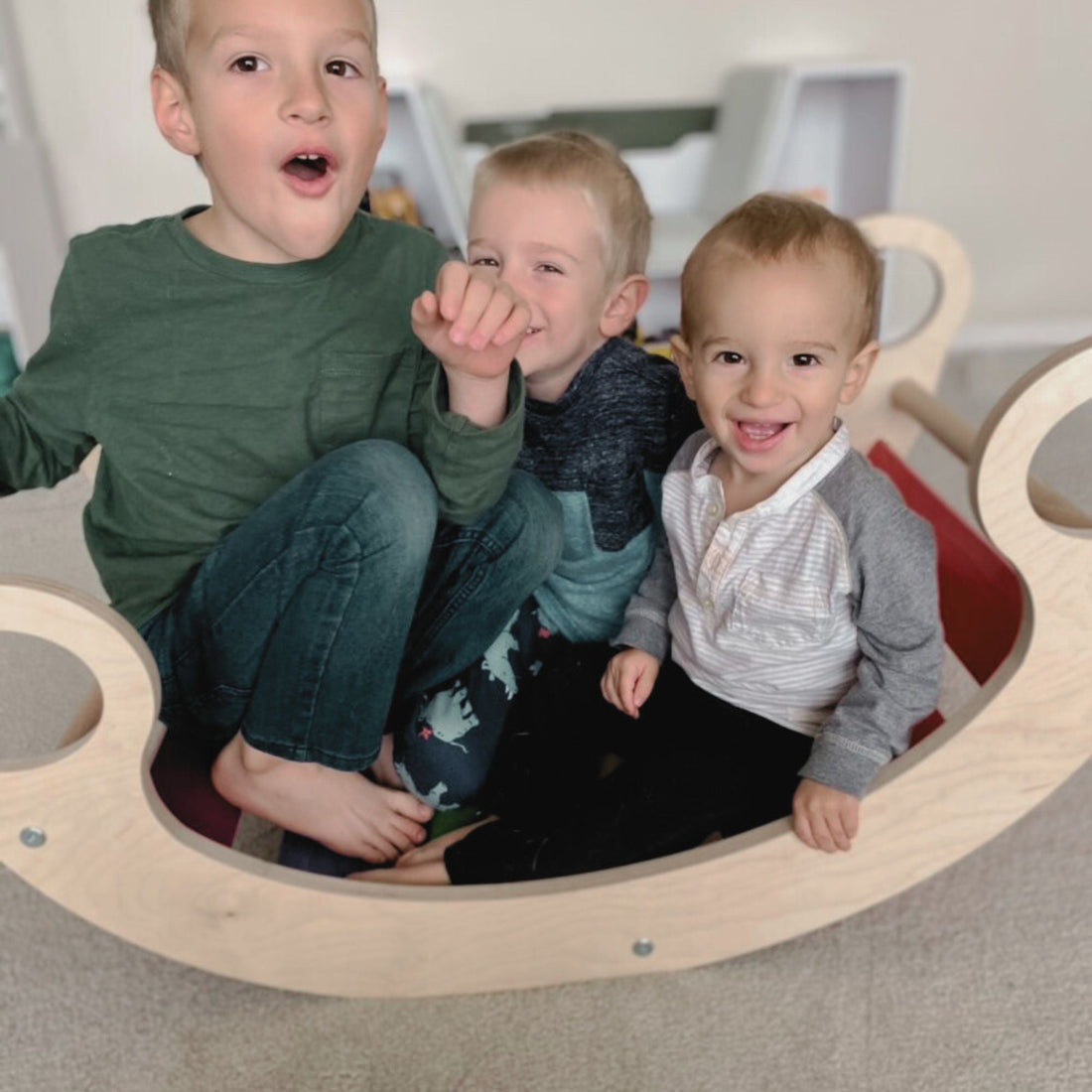
Open-ended play means there’s no “right” way to use the toy. A balance board isn’t just a board — it becomes a bridge, a boat, a ramp, a seat, a stage. A climbing arch turns into a tunnel, a mountain, or a cozy reading nook.
With open-ended toys, children are in charge of the story. That boosts:
- Creativity and storytelling
- Problem-solving skills
- Self-confidence and independence
- Extended attention spans
When your grandchild plays this way, they’re not just having fun — they’re building the foundation for lifelong learning.
2. Screen-Free Play: Because Childhood Shouldn’t Be Digitized
While screens can have a place, too much tech too soon limits imagination, delays motor development, and disconnects kids from the world around them.
Screen-free play, especially active and physical play, helps children:
- Build balance, coordination, and core strength
- Regulate emotions and reduce stress
- Engage in quiet concentration and joyful movement
- Connect with others through shared play
When you give a screen-free gift, you’re giving them a healthier, more grounded childhood experience.
3. Active Play: Movement Builds the Body and the Brain
Children aren’t meant to sit still all day. Active play gets their bodies moving and their brains firing. Simple, open-ended movement toys like wobble boards, ramps, and climbing structures help kids:
- Develop gross motor skills
- Improve balance and spatial awareness
- Build resilience by trying, failing, and trying again
- Release energy and feel joy
These kinds of play experiences are not only fun - they’re essential for healthy development.
4. Why Grandparents Are Perfectly Positioned to Inspire Play
You bring something special to the table: perspective. You know that toys don’t need to flash or make noise to matter. You know that simple things - a box, a board, a climb - can spark the biggest adventures.
When you give your grandchild a gift that encourages meaningful play, you’re not just giving them something to do. You’re giving them confidence, curiosity, and a chance to grow up with joy.
That’s what makes your gift unforgettable.
5. What to Look for in a Meaningful Gift
Here’s what we recommend choosing as a grandparent:
- Open-ended: No instructions. Just imagination.
- Screen-free: Encourages real-world connection.
- Movement-based: Builds strength and coordination.
- Beautifully made: Something they’ll want to keep and use daily.
- Heirloom quality: Built to last. Built to be remembered.
- Made in the USA: Bonus points for supporting small family-run businesses!
Final Thoughts: You’re Giving More Than a Toy
When your grandchild unwraps your gift, they may see a board or a ramp.
But what you’re really giving is space to move, freedom to imagine, and time to grow.
You’re giving a part of your heart — and that’s the most meaningful gift of all.


